
News
How to Choose the Right Marble Glue for Different Stone Applications
Choosing the right marble glue is important for achieving strong, durable and visually clean stone bonding and repair. Different types of marble, granite and engineered stone have different characteristics, and the adhesive should be selected according to the application, working conditions and required finish.
For stone fabricators, contractors, distributors and importers, understanding the key factors behind adhesive selection can help reduce bonding problems and improve project quality.
1. Consider the Type of Stone
The first step is to identify the material you are working with.
Marble, granite, limestone, travertine, engineered stone and other decorative stones can have different levels of porosity, density and surface characteristics.
A marble adhesive should provide good adhesion to the specific stone while maintaining suitable curing performance.
For example, light-colored marble may require a light-colored or color-matched adhesive to reduce the visibility of the joint after polishing.
2. Consider the Application
Marble glue can be used for several different applications, including:
* Marble and stone bonding
* Seam filling
* Crack repair
* Edge repair
* Stone fabrication
* Decorative stone installation
* Small chips and surface repairs
The required adhesive performance can vary according to the application.
For structural or high-load applications, buyers should always select an adhesive specifically designed and tested for the intended use.
3. Consider Curing Time
Curing speed is another important factor.
A fast-curing marble adhesive can improve production efficiency in stone fabrication workshops. However, extremely fast curing may reduce working time, especially for larger or more complicated repairs.
The ideal curing speed depends on the working environment, temperature and application process.
4. Color Matching Matters
For decorative stone applications, appearance is almost as important as bonding performance.
A visible adhesive joint can negatively affect the finished appearance of marble or granite.
Professional stone adhesive suppliers may offer different colors or customized colors to match specific stone materials.
Color matching is particularly important for:
* White marble
* Beige marble
* Cream-colored stone
* Dark granite
* Artificial stone
* Decorative stone products
5. Consider Shelf Life and Storage
Before purchasing marble glue, importers and distributors should check the product’s shelf life, recommended storage conditions and packaging.
A longer shelf life can be particularly useful for distributors who need to keep inventory for extended periods.
Products should be stored according to the manufacturer’s recommendations, including temperature and humidity requirements.
6. Evaluate the Supplier, Not Just the Price
The lowest price does not necessarily represent the lowest total cost.
When comparing marble glue suppliers, buyers should consider:
* Product consistency
* Raw material quality
* Bonding performance
* Curing characteristics
* Color stability
* Shelf life
* Packaging quality
* Quality control
* Technical support
* OEM and private-label capabilities
A consistent product can help distributors reduce customer complaints and maintain their reputation in the market.
Choosing a Reliable Marble Glue Supplier
For importers and distributors, working with a manufacturer that understands both product formulation and international markets can simplify purchasing and product development.
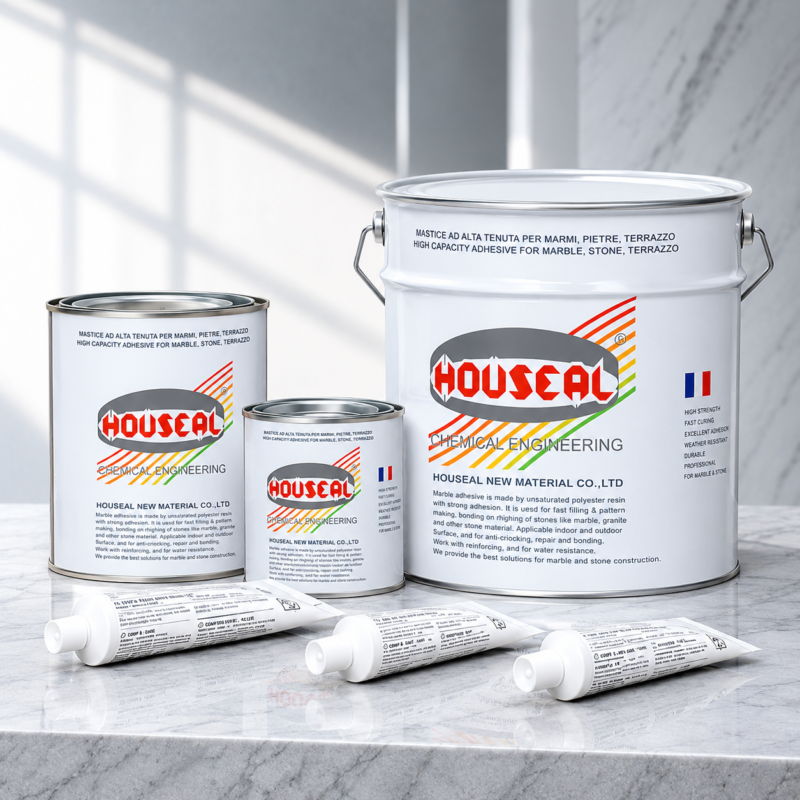
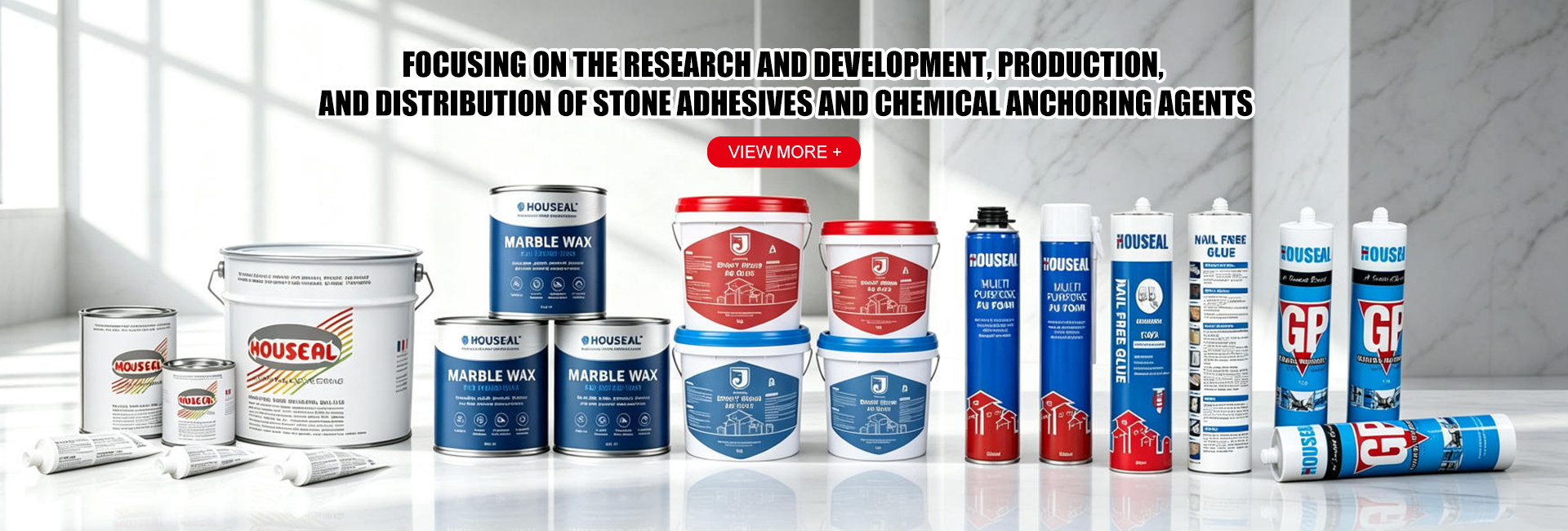
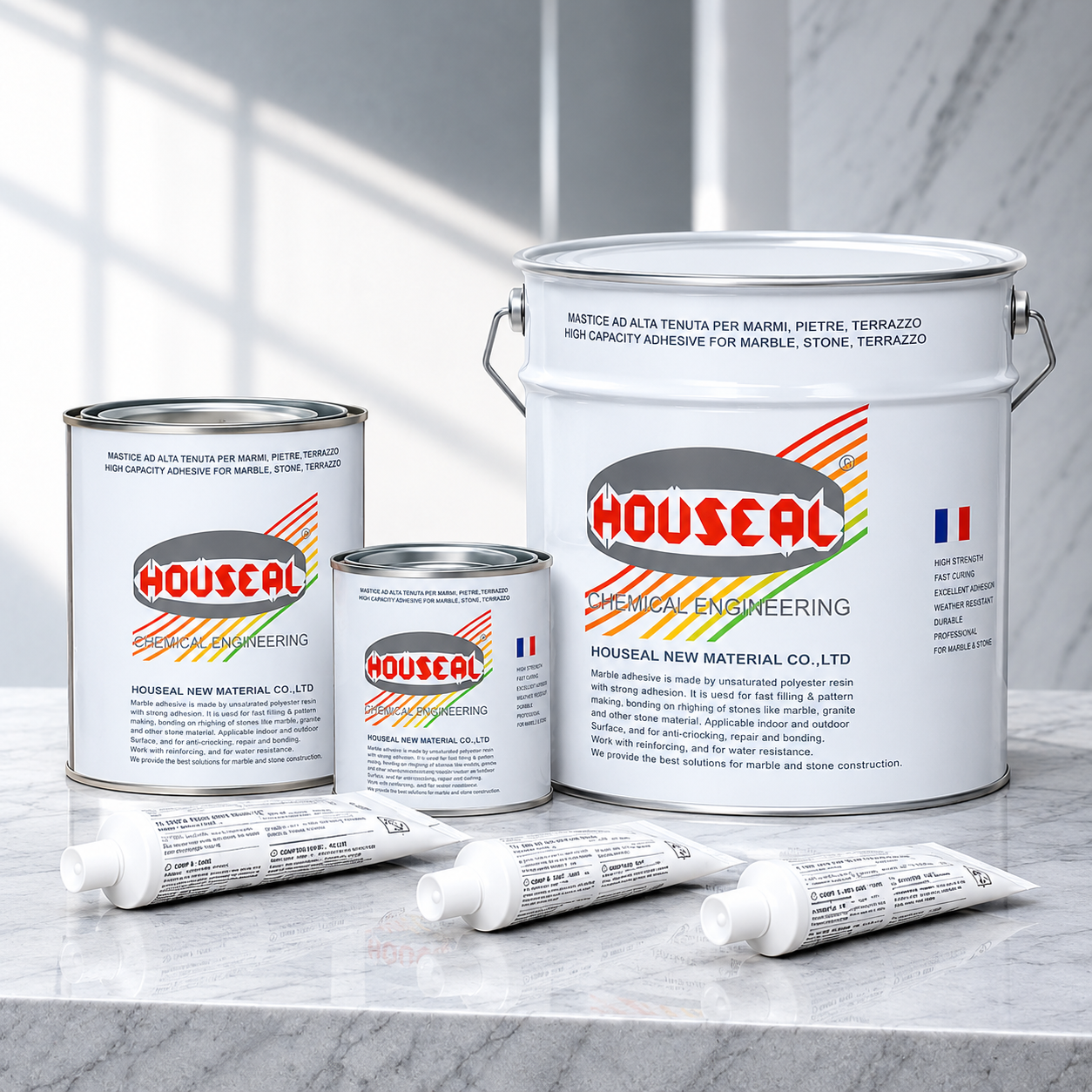
Houseal works with G-Koll manufacturing facilities to provide marble glue and other adhesive solutions for international customers. Solutions can include product customization, color matching, packaging customization and OEM/ODM services.
If you are looking for marble glue for stone fabrication, repair or distribution, contact Houseal to discuss your application and product requirements.